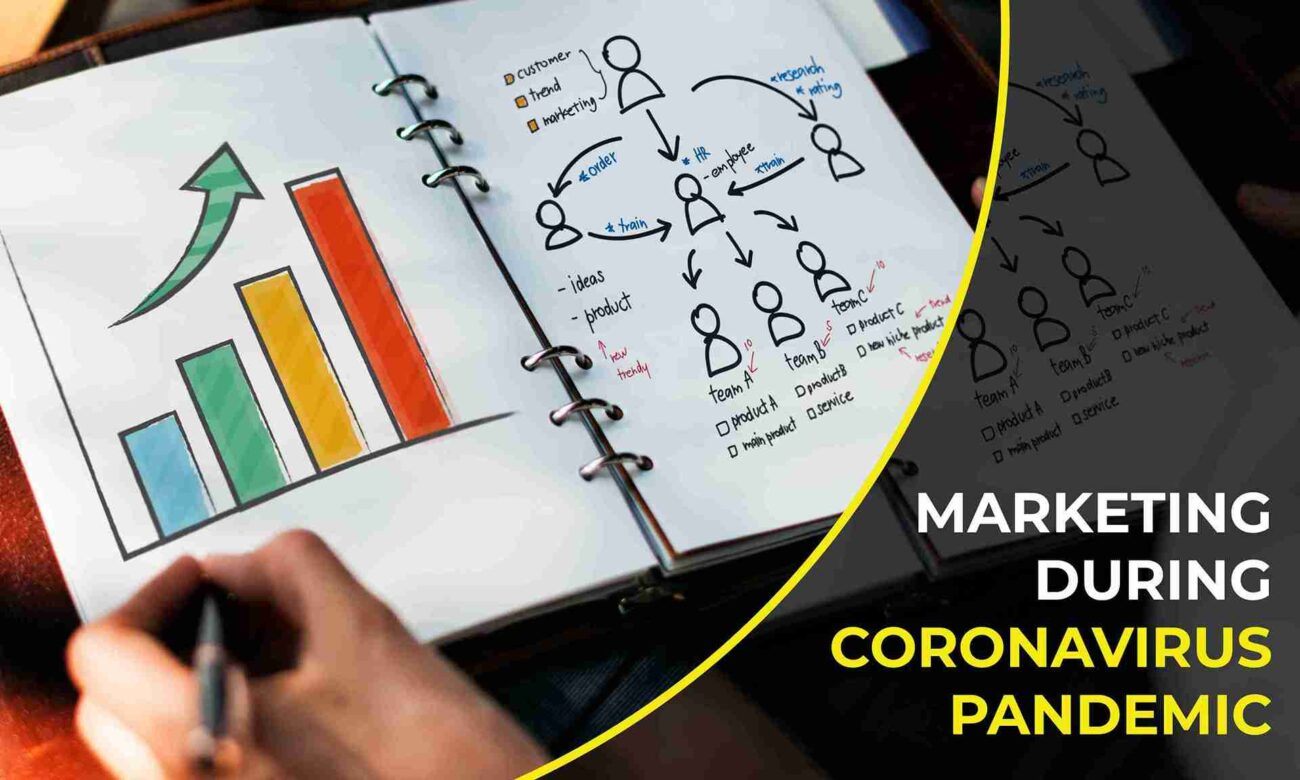
The COVID-19 pandemic changed the way businesses operate, communicate and connect with customers. What began as a sudden disruption accelerated changes that were already taking place in marketing, technology and consumer behavior.
Businesses that once depended heavily on physical interactions had to move online. Customers became more comfortable researching products and services digitally. Social media, websites, online advertising, video meetings, e-commerce, CRM platforms and marketing automation became increasingly important.
But the marketing environment has continued to evolve long after the pandemic.
In 2026, businesses are no longer simply asking how to market during a crisis. They are asking a bigger question:
How can we build a marketing strategy that remains relevant as customer expectations, technology and search behavior continue to change?
The answer lies in combining customer understanding, strong branding, useful content, digital marketing, data, technology and a clear business strategy.
How COVID-19 Changed Marketing
Before the pandemic, many businesses treated digital marketing as one part of their overall marketing strategy.
The pandemic changed that approach.
Websites, search engines, social media, online advertising, email marketing and digital communication became essential ways for businesses to stay connected with customers.
The biggest change was not simply the move from offline to online. It was the change in customer expectations.
Customers became accustomed to researching before contacting a business. They began comparing brands, reading reviews, checking websites, watching videos and looking for answers online.
This created a more informed customer journey.
Today, a potential customer may discover a business through Google, social media, an online review, an AI-powered search experience or a recommendation before ever speaking to a salesperson.
That means marketing must work across the entire customer journey.
From Pandemic Marketing to Modern Marketing
During the pandemic, marketers had to focus on uncertainty, empathy and rapid communication.
Those lessons are still relevant, but the objective has changed.
Businesses now need to build marketing systems that can adapt to changing customer needs rather than reacting only when a crisis occurs.
A modern marketing strategy should answer five questions:
- Who are we trying to reach?
- What problem are we helping them solve?
- Why should they trust our brand?
- Where are they searching for information?
- What experience do we provide after they discover us?
The strongest marketing strategies connect these questions with the wider business strategy.
1. Customer Behavior Has Become More Digital
Customers now have more ways to discover and evaluate businesses than ever before.
A typical customer journey can include:
- Google Search
- AI-powered search
- Social media
- Business websites
- Online reviews
- YouTube and video content
- Recommendations
- Comparison websites
- Direct conversations with sales teams
Because of this, businesses cannot depend on a single marketing channel.
A strong digital presence should provide consistent information wherever customers encounter the brand.
Your website should explain what you do.
Your content should answer customer questions.
Your social media should demonstrate your expertise.
Your reviews should build trust.
Your marketing campaigns should guide customers toward meaningful actions.
2. Digital Marketing Is Now a Business Growth Function
Digital marketing should not be treated simply as a way to generate website traffic.
The real purpose of marketing is to support business growth.
That means connecting marketing activity with measurable business outcomes such as:
- Qualified leads
- Sales opportunities
- Customer acquisition
- Brand awareness
- Customer retention
- Repeat purchases
- Market expansion
- Brand credibility
For example, generating 10,000 website visitors may look impressive, but it does not automatically mean the business is growing.
A smaller audience with strong purchase intent can sometimes create more business value.
The focus should therefore move from traffic alone to relevant traffic, engagement and conversion.
3. SEO Is Changing With Search Behavior
Search engine optimization remains important, but the search environment is changing.
Customers no longer interact with search engines only through traditional blue links.
Google is introducing more AI-powered experiences, including AI Overviews and AI Mode, while users increasingly expect direct answers to complex questions. Google has also published guidance specifically addressing optimization for generative AI features in Search.
This means businesses should focus on creating content that genuinely answers questions and demonstrates knowledge.
Instead of producing content only around keywords, businesses should build useful topic coverage.
For example, a business offering digital marketing services could create content around:
- Digital marketing strategy
- SEO
- Local SEO
- Social media marketing
- Paid advertising
- Content marketing
- Customer acquisition
- Conversion optimization
- AI search
- Brand positioning
These topics can support both users and search engines in understanding the company’s expertise.
4. AEO and GEO Are Becoming Part of the Search Conversation
Search is no longer limited to traditional search engine results.
People are increasingly asking AI systems questions such as:
- Which digital marketing company should I choose?
- What is the best marketing strategy for my business?
- How can a small business improve its online visibility?
- What should a company consider before investing in SEO?
This creates a new opportunity for businesses to make their expertise understandable to AI-powered search experiences.
Answer Engine Optimization (AEO) focuses on creating clear answers to questions.
Generative Engine Optimization (GEO) focuses on making content useful and understandable within generative AI search experiences.
However, businesses should not treat AEO or GEO as a replacement for SEO.
Google’s current guidance makes clear that established SEO practices continue to matter for visibility in its generative AI search features.
The better approach is to create genuinely useful content that works for people first and is also easy for search systems to understand.
5. AI Is Changing the Marketing Workflow
Artificial intelligence has become one of the biggest changes in modern marketing.
AI can help marketers with:
- Customer research
- Content research
- Keyword research
- Data analysis
- Campaign planning
- Content ideation
- Personalization
- Customer segmentation
- Competitive analysis
- Marketing automation
But AI should not replace human expertise.
Producing large quantities of generic AI-generated articles without adding original value can create poor-quality content. Google explicitly warns against scaled content created primarily to manipulate search rankings, including large amounts of unoriginal AI-generated content.
The strongest approach is:
Human expertise + customer insight + original thinking + AI assistance
AI can accelerate the marketing process, but strategy and judgment should remain human-led.
[ Read More: Neuromarketing- Brainology behind great Marketing ]
6. Brand Trust Matters More Than Ever
The pandemic reinforced the importance of trust.
Customers want to know:
- Who is behind the company?
- Can I trust this business?
- Does the company understand my problem?
- Are its claims credible?
- What do existing customers say?
- Is the information on the website reliable?
A strong brand therefore needs more than a logo.
Brand credibility is built through:
- Consistent communication
- Useful content
- Customer reviews
- Case studies
- Demonstrated expertise
- Transparent information
- Strong customer experiences
- Consistent visual identity
Marketing should make the brand easier to understand and easier to trust.
7. Content Marketing Needs to Become More Useful
One of the biggest mistakes businesses make is creating content simply because they believe they need a blog.
More content does not automatically mean better marketing.
The goal should be to create content that helps a real customer make a decision.
Useful content can include:
- How-to guides
- Industry insights
- Case studies
- Research
- Comparisons
- Expert opinions
- Customer stories
- Checklists
- Strategic frameworks
- Frequently asked questions
A strong article should answer the reader’s question better than a generic summary of information already available online.
That is particularly important as search systems increasingly evaluate content based on usefulness and relevance.
8. Social Media Has Become More Than a Promotional Channel
Social media is no longer simply a place to publish advertisements.
It can help businesses:
- Build communities
- Demonstrate expertise
- Share customer stories
- Humanize the brand
- Launch products
- Gather customer feedback
- Understand trends
- Generate demand
The best social media strategy is not necessarily about posting every day.
It is about publishing the right content for the right audience.
For example:
Educational content can build authority.
Behind-the-scenes content can humanize a brand.
Case studies can demonstrate results.
Customer stories can build trust.
Short-form video can increase discovery.
The content should ultimately support the brand’s larger marketing strategy.
[ Read More: Expert social media branding tips for your business ]
9. First-Party Customer Data Is Becoming More Valuable
Businesses need to understand their customers without depending entirely on third-party platforms.
First-party data can include information collected directly through legitimate customer interactions, such as:
- Website interactions
- CRM records
- Email subscriptions
- Customer enquiries
- Purchase history
- Feedback
- Customer preferences
When used responsibly, this information can help businesses create more relevant experiences.
For example, instead of sending the same message to every customer, a company can create different communication based on customer needs and stages of the buying journey.
10. Local Businesses Need Strong Digital Visibility
For businesses serving a specific city or region, local visibility remains important.
A local marketing strategy can include:
- Google Business Profile
- Local SEO
- Location-specific website pages
- Customer reviews
- Local content
- Consistent business information
- Local backlinks
- Social media
- Community engagement
For example, a company serving Hyderabad should make it clear what it offers, who it serves and which geographic areas it covers.
Local marketing is not simply about adding a city name to every page.
It is about demonstrating genuine relevance to the local customer.
11. Marketing and Business Strategy Should Work Together
Marketing cannot solve every business problem.
If a product is poorly positioned, marketing may only increase awareness of the problem.
If the customer experience is weak, successful advertising may generate more complaints.
If the sales process is unclear, additional leads may not produce additional revenue.
That is why marketing should be connected to:
- Business strategy
- Brand strategy
- Product strategy
- Customer experience
- Sales
- Operations
- Technology
This is where a broader business design approach becomes valuable.
Marketing should not operate in isolation.
It should support the entire business and customer lifecycle.
12. The Importance of an Omnichannel Customer Journey
Customers may interact with a brand through multiple channels before making a decision.
For example:
Google Search → Website → LinkedIn → Case Study → Contact Form → Sales Conversation
Another customer might follow:
Instagram → Website → Reviews → WhatsApp → Consultation
A good marketing strategy ensures that the brand message remains consistent across these touchpoints.
Customers should not feel like they are interacting with completely different companies on different platforms.
13. Marketing Budgets Should Focus on Outcomes
Marketing budgets should be evaluated based on business objectives rather than vanity metrics.
Instead of asking:
How many impressions did we receive?
Businesses should also ask:
- How many qualified leads did we generate?
- Which channels generated opportunities?
- Which campaigns generated revenue?
- Which content attracted high-intent visitors?
- What is the cost of customer acquisition?
- Which customers have the highest lifetime value?
This creates a more accountable marketing system.
14. What Businesses Should Do Differently in 2026
A modern marketing strategy should focus on several priorities.
Build a strong digital foundation
Make sure the website is technically sound, mobile-friendly, fast and easy to navigate.
Create useful content
Answer real customer questions instead of producing content only to target keywords.
Strengthen brand credibility
Use case studies, reviews, expertise and clear communication to demonstrate why customers should trust the business.
Optimize for modern search
Continue investing in SEO while making content understandable for AI-powered search experiences.
Use AI intelligently
Use AI to improve research, analysis and workflows while maintaining human review and original expertise.
Connect marketing with sales
Make sure marketing-generated leads can move smoothly into the sales process.
Measure business outcomes
Track qualified leads, conversions and revenue instead of focusing only on traffic and impressions.
Common Marketing Mistakes Businesses Should Avoid
1. Creating content only for search engines
Content should be created for people first.
2. Publishing large amounts of generic AI content
Quantity cannot replace expertise and originality.
3. Ignoring the customer journey
Marketing should support customers from discovery through decision and beyond.
4. Depending on one platform
Search rankings, social media algorithms and advertising costs can change.
A diversified marketing system is more resilient.
5. Focusing only on short-term campaigns
Long-term brand building, content and customer relationships remain important.
6. Ignoring existing customers
Acquiring new customers is only one part of growth.
Existing customers can contribute through repeat business, referrals, reviews and long-term relationships.
A Practical Marketing Framework for 2026
Businesses can use the following framework to build a modern marketing strategy:
1. Understand
Research customers, competitors and market conditions.
2. Define
Clearly define the target audience, positioning and business objectives.
3. Design
Create the brand, customer journey, content strategy and marketing system.
4. Develop
Build the website, content, campaigns, technology and marketing assets.
5. Deploy
Launch campaigns across the most relevant channels.
6. Measure
Track traffic, engagement, leads, conversions and business results.
7. Improve
Use data and customer feedback to continuously improve the strategy.
This creates a marketing system rather than a collection of disconnected campaigns.
The Future of Marketing Is Customer-Centered
The biggest lesson from the pandemic was not that every business needs to move online.
It was that businesses need to adapt quickly to changes in customer behavior.
That lesson remains relevant in 2026.
Artificial intelligence will continue to evolve. Search will continue to change. Social platforms will change. Customer expectations will change.
Businesses that build flexible marketing systems will be better prepared for those changes.
The goal is not to predict every future trend.
The goal is to build a business and marketing strategy that can respond when the market changes.
How The Reform Design Helps Businesses Build Better Marketing Strategies
At The Reform Design, marketing is viewed as part of a larger business and brand ecosystem.
Businesses may need more than advertising or SEO alone.
They may need to clarify their positioning, improve their customer experience, strengthen their brand, redesign their digital presence or create a more effective business system.
A connected approach can bring together:
- Digital marketing
- SEO
- Social media marketing
- Brand management
- Web development
- Business process and system design
- Customer experience
- Content strategy
- Visual communication
The objective is to connect these areas so that marketing supports meaningful business outcomes.
Frequently Asked Questions
How did COVID-19 change marketing?
COVID-19 accelerated digital adoption and changed how customers communicate, research businesses and make purchasing decisions. Websites, social media, online communication, digital advertising and customer relationship tools became more important.
What is post-pandemic marketing?
Post-pandemic marketing refers to marketing strategies designed for the customer behaviors and digital environment that developed or accelerated after COVID-19. It includes digital-first customer journeys, stronger online communication, personalization, content marketing and data-driven decision-making.
What are the biggest marketing trends in 2026?
Major areas include AI-assisted marketing, AI-powered search experiences, SEO, AEO, GEO, personalized customer experiences, short-form video, first-party data, content marketing, local SEO and stronger brand credibility.
Is SEO still important in 2026?
Yes. SEO remains important because businesses still need to be discoverable through search. Google also states that SEO best practices continue to be relevant for its generative AI search experiences.
What is AEO?
Answer Engine Optimization, or AEO, is the practice of creating content that provides clear, useful answers to questions people ask through search engines and answer-oriented systems.
What is GEO?
Generative Engine Optimization, or GEO, refers broadly to improving a brand’s content and information so that it can be understood and potentially surfaced in generative AI search experiences.
Should businesses use AI to create marketing content?
Businesses can use AI as a marketing assistant for research, ideation, analysis and workflow improvements. However, content should still provide original value, human expertise and accurate information. Creating large amounts of unoriginal content primarily to manipulate search rankings can violate Google’s spam policies.
Is traditional marketing still relevant?
Yes. Traditional marketing can still be effective depending on the audience, industry and objective. The best strategy is not necessarily digital versus traditional marketing. It is choosing the channels that effectively reach the intended audience and support the business objective.
How can a small business improve its marketing strategy?
Start with a clear target audience and value proposition. Then build a strong website, optimize local and organic search visibility, create useful content, establish social proof, use relevant digital channels and measure qualified leads and conversions.
Final Thoughts
The marketing landscape has changed significantly since the COVID-19 pandemic.
The most important lesson is not simply to become more digital.
It is to become more customer-focused, adaptable and connected.
Modern marketing requires businesses to understand their customers, communicate clearly, build trust, create useful content and use technology intelligently.
In 2026, successful marketing is not about following every new trend.
It is about building a marketing system that connects people, brand, technology and business strategy.
Businesses that continuously learn, adapt and improve will be better positioned to build stronger brands and sustainable growth in an increasingly digital world.