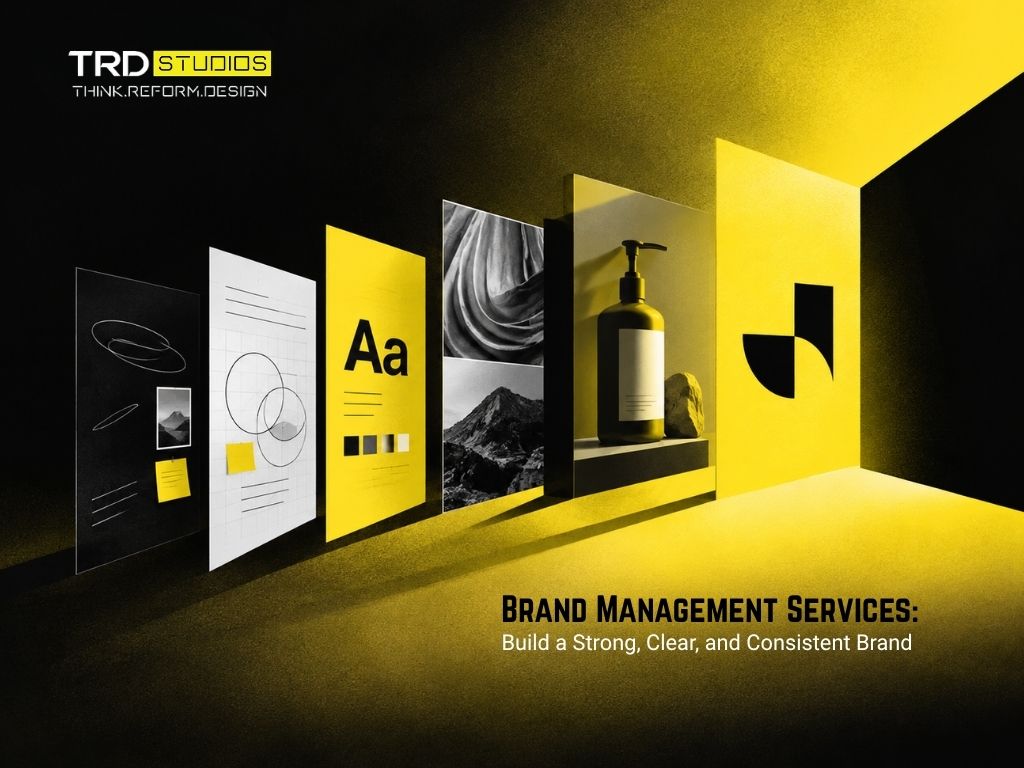
A brand is more than a logo, business name, or colour. It is the way people understand, recognize, and remember a business. A strong brand helps customers know what a company offers, what makes it different, and why they should choose it.
Today, customers interact with businesses through websites, social media, advertisements, brochures, packaging, and many other channels. If a business uses different designs, messages, and colours across these platforms, customers may find it difficult to recognize the brand.
Brand Management Services help businesses create, maintain, and improve a consistent brand identity. These services help bring together brand strategy, visual design, communication, and customer experience.
At The Reform Design (TRD), brand management focuses on understanding the business, identifying its needs, and developing branding solutions that support its goals.
What Are Brand Management Services?
Brand Management Services help businesses manage how their brand looks, communicates, and connects with customers. The goal is to create a clear and consistent identity across all customer touchpoints.
Brand management can include:
- Brand strategy and planning
- Brand identity and logo design
- Brand positioning
- Brand messaging and communication
- Brand guidelines
- Packaging design
- Marketing materials
- Digital brand management
- Competitor and market analysis
- Brand audits and improvements
For example, imagine a company uses a blue logo on its website, a different logo on social media, and different colours in its brochures. This can make the brand look inconsistent.
With proper brand management, the company can follow a common design style, message, and identity across all platforms.
[Read More: What is a DPR Report? A Complete Guide to DPR (Detailed Project Report) ]
Why Are Brand Management Services Important?
Every business wants customers to recognize its products or services. However, having a good product or an attractive logo alone may not be enough.
A business needs a clear identity, a strong message, and a consistent way of communicating with its audience.
1. Builds Brand Recognition
Brand recognition means customers can identify your business when they see its logo, colours, name, or other visual elements.
Using the same brand elements across your website, social media, advertisements, and marketing materials can make your business easier to recognize.
2. Creates a Professional Brand Image
Customers often form an impression of a business based on its appearance and communication.
A well-managed brand can present the business in a more organized and professional way. Consistent design and clear messaging help create a positive impression.
3. Builds Customer Trust
Customers want to understand what a business offers and what they can expect from it.
Consistent communication helps set clear expectations. When a business delivers on its promises, it can build stronger customer relationships over time.
4. Helps Your Business Stand Out
Many companies offer similar products and services. A clear brand identity helps explain what makes your business different.
Brand positioning, design, and messaging can help communicate your strengths and give customers a reason to remember your business.
5. Supports Marketing Activities
Brand management gives marketing teams a common direction to follow.
Whether the business creates a social media post, runs an advertisement, publishes a blog, or designs a brochure, all marketing materials can follow the same brand identity.
6. Supports Long-Term Business Growth
As a business grows, it may launch new products, enter new markets, or reach different customer groups.
A strong brand foundation helps the business maintain consistency while adapting to these changes.
[ Read More: Process and System Design Services ]
What Does Brand Management Include?
Brand management covers several important areas. Each area plays a role in building a clear and consistent brand.
1. Brand Strategy
Brand strategy is a plan that explains how a business wants to present itself to its target audience.
It helps answer important questions:
- What does the business want to achieve?
- Who are its target customers?
- What problems does it solve?
- What makes it different from competitors?
- What message should customers remember?
A clear brand strategy helps ensure that design, communication, and marketing decisions support the same business goals.
2. Brand Identity Design
Brand identity includes the visual elements people associate with a business.
It may include:
- Logo design
- Brand colours
- Typography and fonts
- Icons and graphics
- Photography style
- Design layouts
- Other visual elements
For example, a premium product brand may use a simple design, carefully selected colours, and clean typography to communicate quality.
A consistent visual identity helps customers recognize the brand across different platforms.
3. Brand Positioning
Brand positioning explains how a business wants customers to understand it compared with other businesses in the market.
For example, a company may want to be known for affordable services, premium quality, personalized support, or innovative solutions.
Good brand positioning helps customers understand why the business is relevant to them.
4. Brand Messaging
Brand messaging is the way a business explains its value to customers.
It includes the main ideas, words, and messages used in communication.
Brand messaging can cover:
- Brand statements
- Taglines and slogans
- Website content
- Advertising messages
- Product descriptions
- Social media captions
- Company presentations
The message should be simple, clear, and suitable for the target audience.
5. Brand Guidelines
Brand guidelines explain how a business should use its brand elements.
They help employees, designers, marketing teams, and external agencies follow the same standards.
Brand guidelines may include:
- Correct logo usage
- Colour codes
- Font styles
- Image selection
- Graphic design rules
- Brand tone of voice
- Social media design standards
- Marketing material guidelines
For example, if different designers create brochures and social media posts, brand guidelines help them maintain a consistent appearance.
6. Brand Collateral Design
Brand collateral refers to the materials a business uses to communicate with customers and promote its products or services.
Examples include:
- Company profiles
- Brochures and flyers
- Business cards
- Product catalogues
- Presentations
- Posters and banners
- Sales documents
- Digital advertisements
Well-designed brand collateral helps businesses communicate information in a clear and consistent way.
7. Packaging Design
Packaging is often one of the first things customers notice when they see a product.
Good packaging design combines visual appeal, useful information, functionality, and brand identity.
Packaging should reflect the brand’s personality and help customers understand the product. It should also work well in the environment where the product is sold, whether online or in a physical store.
8. Digital Brand Management
Customers often discover businesses through online platforms before contacting them.
Digital brand management helps maintain a consistent brand presence across:
- Business websites
- Social media profiles
- Google Business Profile
- Online advertisements
- Email communication
- Digital campaigns
- Online business directories
The design, language, and main message should remain consistent across these platforms.
9. Competitor and Market Analysis
Understanding the market helps a business identify opportunities to create a distinct brand.
Competitor analysis can examine:
- Competitor brand messages
- Visual identity and design
- Target audiences
- Products and services
- Market positioning
- Common customer expectations
The purpose is not to copy other businesses. It is to understand the market and identify what makes your business different.
10. Brand Audit
A brand audit is a review of the current brand to understand what is working well and what needs improvement.
It may examine the logo, website, social media, marketing materials, messaging, packaging, and customer communication.
For example, a company may discover that its website looks modern but its brochures and presentations use an outdated design. A brand audit can identify this inconsistency and help the company plan improvements.
[ Read More: Web Development Services: Build Websites That Support Your Business ]
How Does TRD Approach Brand Management?
The Reform Design follows a structured process to understand business challenges and develop practical solutions. Its approach includes five stages: Discover, Define, Design, Develop, and Deploy.
Step 1: Discover
The first step is to understand the business and its current brand.
This includes reviewing the company’s goals, products, services, target customers, competitors, existing identity, and communication.
Understanding these areas helps identify the brand’s strengths and challenges.
Step 2: Define
After understanding the business, the next step is to define the main problems and opportunities.
For example:
- Customers do not clearly understand the brand.
- The brand looks different across platforms.
- The company has no brand guidelines.
- The visual identity no longer represents the business.
- The business needs a clearer position in the market.
Defining the problem helps create a focused branding plan.
Step 3: Design
The design stage focuses on developing suitable branding solutions.
Depending on the project, this may include brand identity, logo design, visual direction, messaging, packaging, and marketing materials.
The objective is to create a brand that reflects the business and communicates effectively with its audience.
Step 4: Develop
The next step is to turn the branding direction into practical assets and guidelines.
These may include design templates, brand guidelines, brochures, presentations, packaging designs, website elements, and social media materials.
This makes it easier for the business to apply its brand identity consistently.
Step 5: Deploy
The final stage is to implement the brand across the relevant business channels.
This may include the website, social media, marketing campaigns, sales materials, packaging, and other customer touchpoints.
The goal is to create a connected brand experience that supports the business’s objectives.
Brand Management for Startups and New Businesses
Startups need to introduce themselves to customers and explain what makes their products or services valuable.
Brand management can help a new business establish a strong foundation from the beginning.
A startup may need:
- A clear brand strategy
- Logo and visual identity
- Brand positioning
- Brand messaging
- Website branding
- Social media identity
- Marketing materials
- Brand guidelines
Creating these elements with a common direction can help a startup present itself consistently as it grows.
Brand Management for Established Businesses
Established businesses may already have a recognized brand, but their needs can change over time.
A company may launch new products, expand into new markets, change its target audience, or face stronger competition.
In these situations, brand management can help review the existing identity and identify areas for improvement.
For example, a company that has grown from a small local business into a larger organization may need updated brand guidelines, a more consistent website, and a clearer communication strategy.
Brand Refresh vs. Rebranding
Brand refresh and rebranding are related, but they are not the same.
What Is a Brand Refresh?
A brand refresh improves selected elements of an existing brand while keeping its main identity recognizable.
It may include updated colours, typography, logo refinements, website design, or improved messaging.
A refresh is useful when the brand still represents the business but needs a more modern and consistent appearance.
What Is Rebranding?
Rebranding involves a more significant change to how a business presents itself.
It may include a new brand strategy, positioning, visual identity, messaging, or brand name.
Rebranding may be considered when a company enters a new market, changes its business direction, or needs to reach a different audience.
The right choice depends on the company’s goals and the problems it wants to solve.
Common Brand Management Problems Businesses Face
Businesses can lose consistency when branding decisions are made without a common plan.
Some common problems include:
Inconsistent logos: Different logo versions appear on websites, brochures, and social media.
Different brand colours: Marketing materials use colours that do not match the main brand identity.
Unclear messaging: Customers find it difficult to understand the company’s products, services, or value.
Outdated design: The brand no longer reflects the business’s current position or audience.
No brand guidelines: Employees and agencies follow different design standards.
Weak differentiation: The brand looks and sounds similar to its competitors.
Disconnected marketing: Website content, advertisements, and social media posts communicate different messages.
Brand Management Services help businesses identify these problems and develop a more consistent approach.
Who Needs Brand Management Services?
Brand management can be useful for businesses at different stages of growth, including:
- Startups and new businesses
- Small and medium-sized businesses
- Established companies
- Manufacturers and product brands
- Healthcare organizations
- Real estate companies
- Technology businesses
- Retail and e-commerce brands
- Educational institutions
- Professional service providers
Any business that wants to improve its identity, communication, and consistency can consider brand management.
Brand Management Services in Hyderabad
Hyderabad has businesses across technology, healthcare, real estate, education, manufacturing, retail, and professional services.
In a competitive market, businesses need to communicate their value clearly and present themselves consistently.
Brand Management Services in Hyderabad can help businesses review their existing identity, understand their target audience, improve brand messaging, and create consistent marketing materials.
For businesses targeting customers in Hyderabad and other markets, branding should reflect the company’s actual strengths and customer needs rather than simply follow current design trends.
The Reform Design offers brand management as part of its broader work across business strategy, design, and digital experiences.
Why Choose The Reform Design for Brand Management Services?
The Reform Design (TRD) takes a business-focused approach to branding. Instead of looking only at a logo or individual design, the process considers the business, its audience, its market, and its communication needs.
TRD’s branding-related work includes:
- Brand Core Identity: Defining or refining the central identity and personality of a brand.
- Logo and Archetype Design: Developing visual identities that communicate the brand’s character and message.
- Brand Collaterals: Creating marketing materials that support brand recognition and communication.
- Packaging Design: Designing packaging that reflects the brand and communicates product information.
- Brand Strategy: Developing a direction for how the brand should be presented and understood.
This approach helps connect branding decisions with wider business objectives.
Learn more about the service on the TRD Brand Management Services page.
Conclusion
A strong brand is built through more than an attractive logo. It requires a clear strategy, consistent design, meaningful communication, and a good understanding of customers.
Brand Management Services help businesses bring these elements together and maintain a consistent identity across their marketing and customer interactions.
From brand strategy and identity design to packaging, marketing materials, and brand guidelines, every element should support the same direction.
The Reform Design helps businesses approach branding through a structured process that connects business understanding, design, and communication.
If your business wants to build a stronger identity, improve brand consistency, or update its existing brand, explore TRD’s Brand Management Services to understand the solutions available for your needs.
Frequently Asked Questions About Brand Management Services
Brand Management Services help businesses create, maintain, and improve their brand identity, strategy, messaging, and communication across different channels.
They help businesses maintain consistency, communicate clearly, improve brand recognition, and explain what makes them different from competitors.
Brand management may include brand strategy, logo design, visual identity, positioning, messaging, brand guidelines, packaging, marketing materials, and brand audits.
Branding focuses on creating the identity and image of a business. Brand management focuses on maintaining, developing, and improving that identity over time.
Yes. Small businesses can use brand management to establish a clear identity, communicate their value, and maintain consistency as they grow.
Yes, logo design can be included. However, brand management is broader than logo design because it also considers strategy, positioning, messaging, visual identity, and customer communication.
Brand guidelines are rules that explain how to use brand elements such as logos, colours, fonts, images, and communication styles consistently.
A brand audit is a review of the existing brand to identify strengths, weaknesses, inconsistencies, and opportunities for improvement.
The timeline depends on the business’s requirements and project scope. A basic brand review may take less time than a complete brand strategy and identity project.
Consistent branding can help customers understand a business and know what to expect. Trust also depends on the quality of products or services and whether the business delivers on its promises.